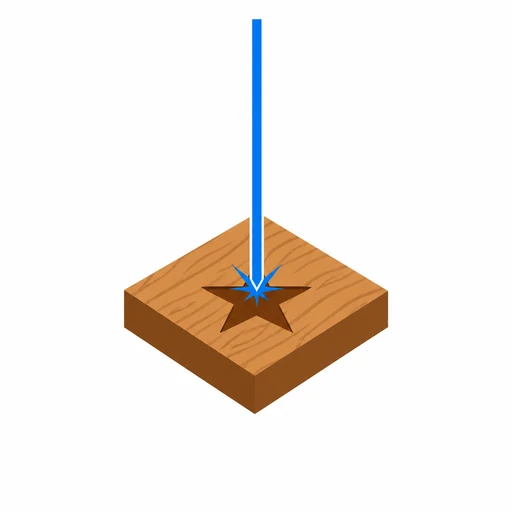
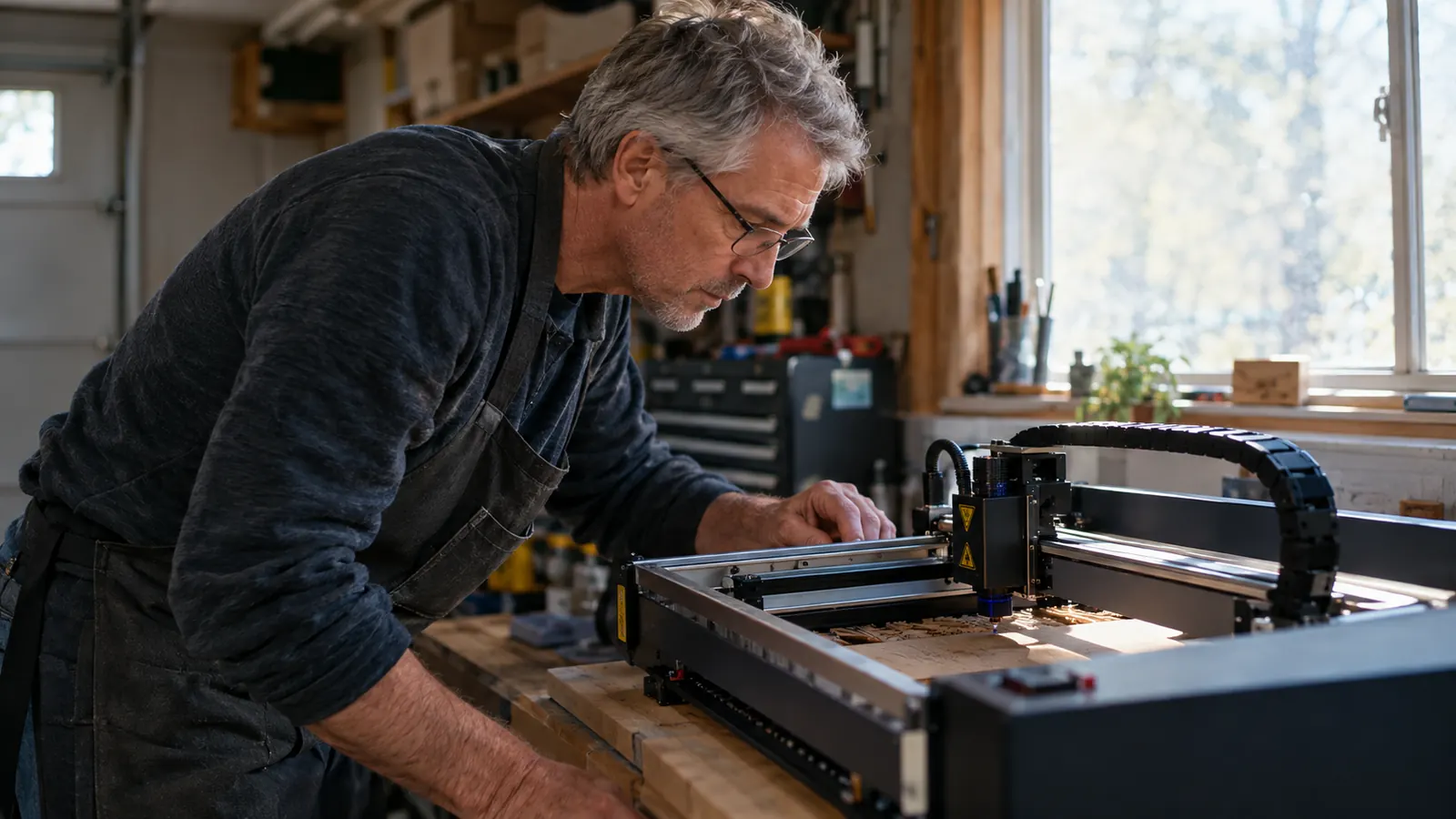
My first laser was a bargain, and I nearly wasted it. I bought a small diode machine four years ago, right after I retired from teaching shop, and I treated it like a toy. I burned boards. I filled the garage with smoke. I blamed the machine for things that were my own doing. The machine was fine. I was the problem.
I tell you this because if you are looking at the Acmer S2 20W laser engraver, you are probably where I was: you want to make things, you have a budget, and you are not sure whether to start small or save up for something bigger. I have been on both sides of that question, and the answer is not the one I expected.
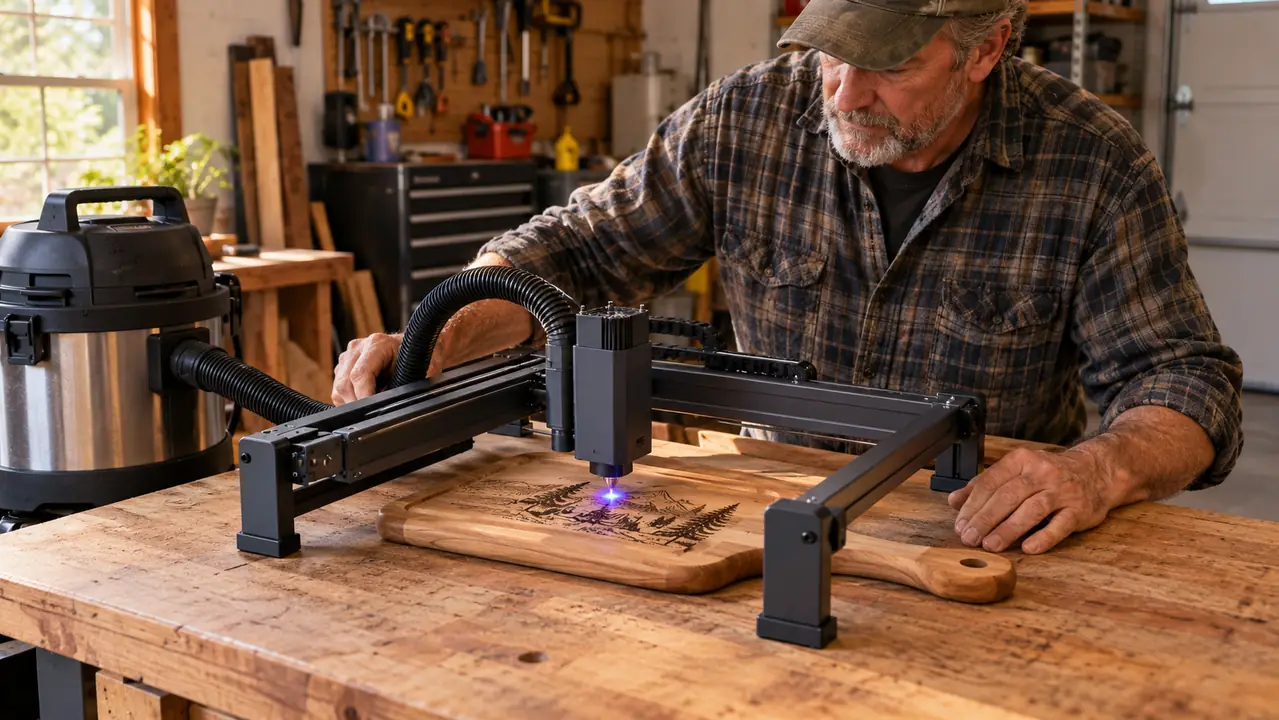
The Acmer S2 is a 20W diode laser with a 25L air assist, and it sits in a completely different class than the little machine I started with. But here is the part nobody tells you: the machine only does what you understand. A bigger laser does not fix a shaky setup. A fancier one does not teach you focus. The Acmer S2 is the machine I wish I had started with, not because it is the most powerful thing I have ever used, but because it is the first one that did not fight me.
I have spent four years engraving cutting boards, leather patches, slate coasters and tumblers in my garage in Tucson, and I have made just about every beginner mistake there is. Let me walk you through the ones that cost me the most, and what I would do differently now.
The machine was fine. I was the problem. The Acmer S2 is the first laser that did not fight me.
Start with a laser that does not fight you
The Acmer S2 20W diode laser with air assist is the machine I wish I had started with. Check today's price on Amazon and see what a beginner-friendly setup actually looks like.
Amazon Check Today's Price on Amazon →My first mistake was skipping the air assist. I thought it was an extra, something for people with more money than sense. So I ran my first machine without it, and every cut came out charred. The wood looked like I had dragged a soldering iron across it. I spent a weekend blaming the laser, then I spent a week learning that a stream of air over the cut changes everything. It clears the smoke, it keeps the surface clean, and it stops the burn marks before they start. The Acmer S2 comes with a 25L air assist built in, and that alone would have saved me a dozen ruined boards in my first month.
My second mistake was rushing the focus. I was impatient. I wanted to see the laser do something, so I set the height by eye, hit start, and watched it engrave a blurry mess into a board I had planned to sell. The Acmer S2 has a fixed focus design, which means you do not have to guess. You set it once, you lock it, and it stays. That sounds like a small thing until you have ruined a piece of walnut because you were two millimeters off.
My third mistake was the garage. I ran my first laser with the door closed, and within an hour my eyes were burning and my wife Linda could smell it from the kitchen. Now I keep a window open behind the workbench, I run a shop vac next to the machine, and I let the air assist do its job. The Acmer S2's air assist does more than improve the cut. It keeps the smoke moving away from you, which matters more than any spec sheet.
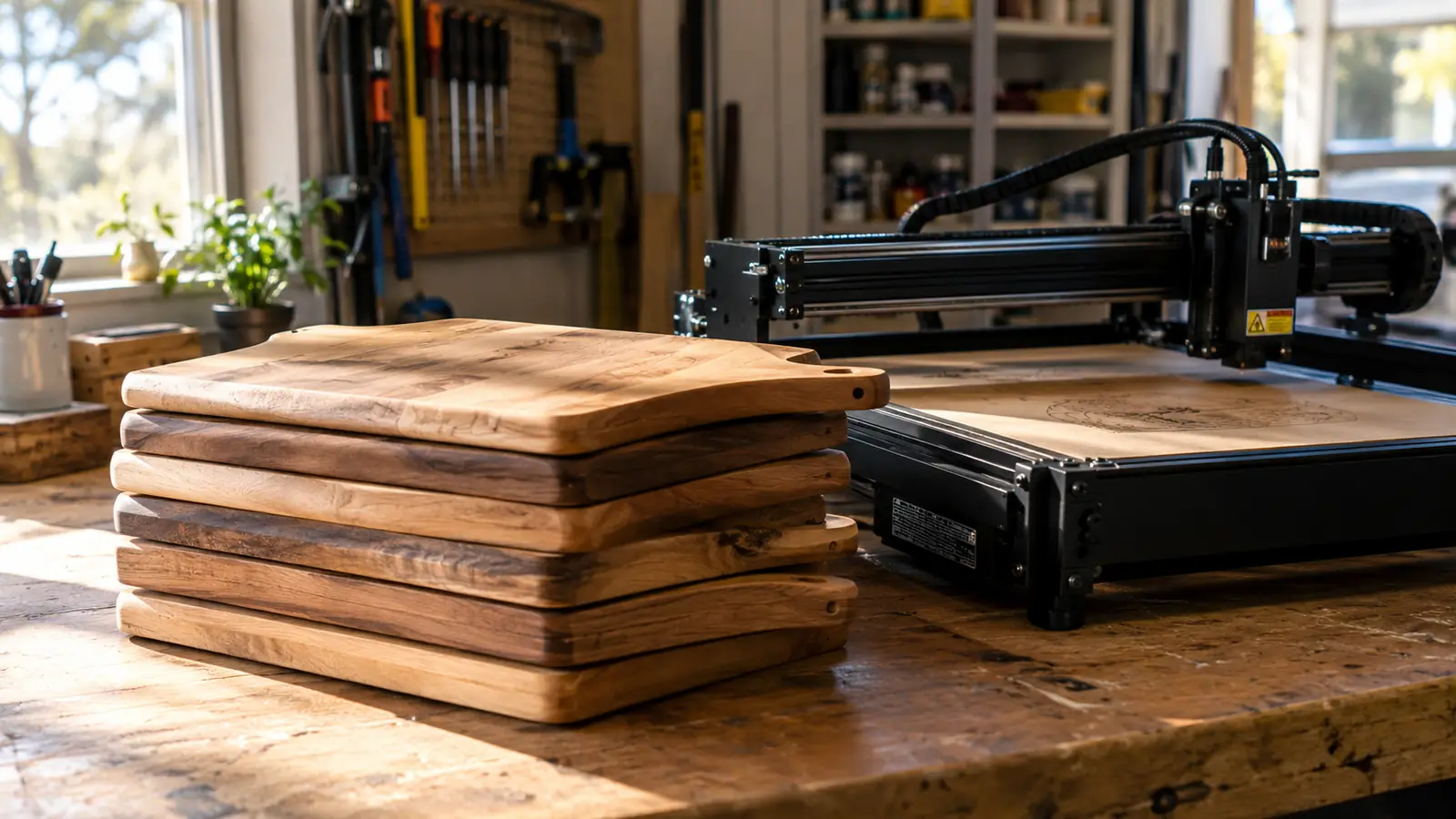
The fourth mistake was the one that nearly made me quit. I bought a machine that was too small for the work I actually wanted to do. I wanted to engrave cutting boards, and I bought a laser with a tiny work area, so I spent my evenings trying to tile designs across multiple passes. The seams never lined up. The boards looked like patchwork. I told myself I needed a bigger machine, and I was half right. What I actually needed was a machine with a work area that matched my projects, and a diode laser that could handle the wood without me babysitting every pass.
The Acmer S2 is that machine for me now. It is not the biggest laser on the market, and I am not going to pretend it is. But it handles the boards, the slate coasters and the leather patches I actually make, and it does it without the smoke, the charring and the guesswork that made my first months miserable.
What I'd Tell You If We Were Sitting at My Kitchen Table
If you were sitting at my kitchen table in Tucson, here is what I would say. Start with a machine that matches the work you want to do, not the work you think you will do someday. A 20W diode laser like the Acmer S2 is a sweet spot for a beginner who wants to engrave wood, leather and slate without spending four figures on a CO2 machine. The air assist is not a luxury, it is the difference between a clean cut and a charred one. The fixed focus is not a limitation, it is a gift. And the work area is big enough for the projects that actually sell at a craft fair.
I would also tell you to expect a learning curve, because there is one. You will burn a board. You will misjudge a speed setting. You will make a coaster that looks like a Rorschach test. That is normal. What matters is that the machine does not add to the difficulty. The Acmer S2 is forgiving in the ways that matter, and that is worth more than a few extra watts you will not use in your first year.
My first laser was a bargain, and I nearly wasted it because I did not understand what I was buying. The Acmer S2 is not the cheapest laser you can find, and it is not the most powerful. It is the one that lets you learn without fighting the tool. If I were starting over tomorrow, knowing what I know now, this is the machine I would put on my workbench.
Give yourself the setup I wish I had
The Acmer S2 20W laser engraver with 25L air assist is ready to go to work in your garage. Check today's price on Amazon and start with the machine that does not fight you.
Amazon Check Today's Price on Amazon →